Last Updated: November 10, 2026
Quick Summary
Commercial floor maintenance for retail stores works best by zone, not as one job. Divide the store into areas such as the entrance, main aisles, checkout counter, and stockroom, then set a sweeping and mopping frequency for each zone. Write the checklist so a new staff member can follow it without questions by naming the tool, zone, and frequency.
- Match cleaning frequency to foot traffic level rather than a fixed calendar.
- High-traffic areas like the entrance and checkout need daily sweeping and damp mopping.
- Ceramic tile needs grit swept before damp mopping or it scratches grout.
- Hardwood is dry mop only, since standing water warps boards.
- Use a floor scrubber for large hard-surface floors and a commercial extractor for carpet.
Table of Contents
- Build a Retail Store Floor Cleaning Checklist by Zone
- Set a Commercial Floor Cleaning Schedule by Traffic Level
- Match Floor Maintenance for Different Flooring Types
- Frequently Asked Questions
Build a Retail Store Floor Cleaning Checklist by Zone
Commercial floor maintenance for retail stores works best by zone, not as one job, and a commercial floor maintenance plan should be built zone by zone. A zone-based plan divides the store into areas such as the entrance, main aisles, checkout counter, and stockroom, with a sweeping and mopping frequency set for each. Write the checklist so a new staff member can follow it without questions: name the tool, zone, and frequency.
For small shops building a zone plan, this janitorial guide for small retail shops covers checklists and after-hours scheduling.
Set a Commercial Floor Cleaning Schedule by Traffic Level
A commercial floor cleaning schedule should match frequency to foot traffic, not a fixed calendar.
| Traffic Level | Typical Area | Sweep | Damp Mop | Deep Clean |
|---|---|---|---|---|
| High | Entrance, checkout | Daily, multiple times | Daily | Monthly |
| Medium | Main aisles | Daily | 2-3 times weekly | Quarterly |
| Low | Back hall, stockroom | Daily | Weekly | Quarterly |
Winter salt and wet grit dull floor finish fast; entrance matting and a longer vestibule sweep do more for durability than any single product. If you clean after hours, this 7-step overnight cleaning prep routine shows how to set up security, checklists, and floor care.
Match Floor Maintenance for Different Flooring Types
Floor maintenance for different flooring types is not one method with different labels. Ceramic tile needs grit swept before damp mopping or it scratches grout; hardwood is dry mop only, since standing water warps boards; carpet needs daily vacuuming in high-traffic lanes and same-day spot cleaning; vinyl and laminate take a pH-neutral damp mop, as harsh cleaners strip the wear layer.
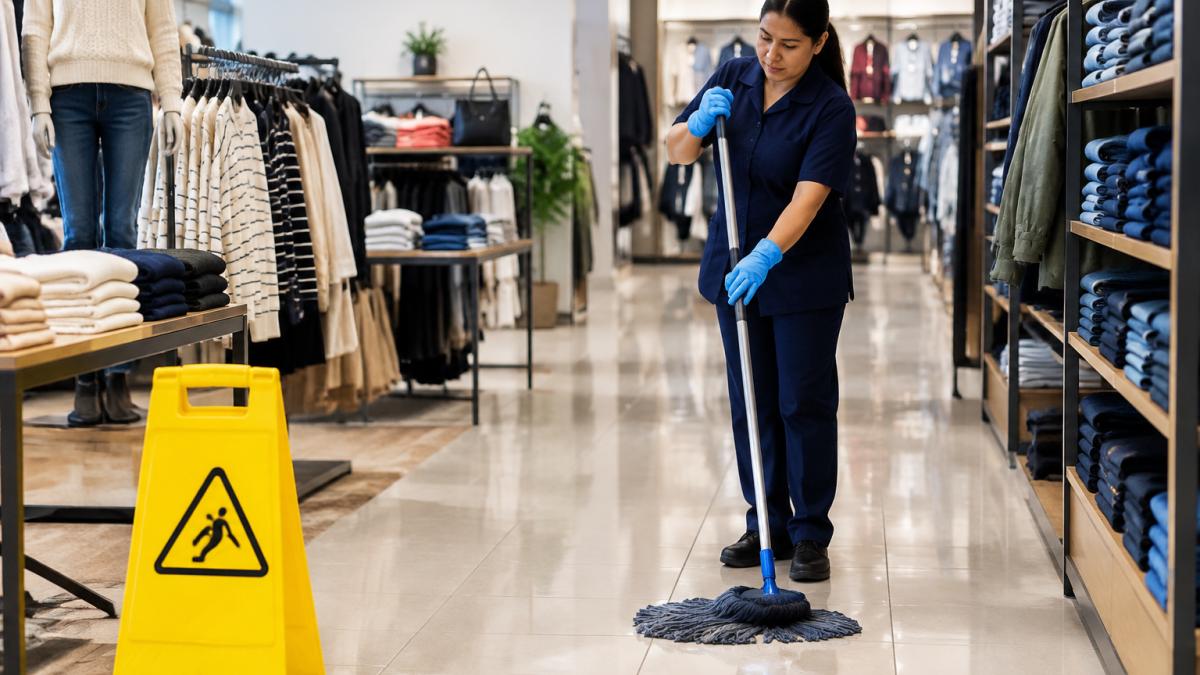
Match commercial floor cleaning equipment to the surface: a floor scrubber for large hard-surface floors, a commercial extractor for carpet. For a reflective finish, floor stripping, waxing, and polishing restores shine safely, while carpeted floors do better with hot-water carpet and upholstery cleaning than spot treatment alone. This guide to choosing floor cleaning methods for office surfaces compares methods by surface.
Retail floors take a beating, and a dull, scuffed surface tells customers the store is tired before they reach the first shelf. Master Cleaning handles that work with bonded and insured staff, a customized cleaning plan built around your floor types, and the same trained team on every visit. Flexible scheduling means the work happens after you close, not during trading hours.
Get started with Master Cleaning and keep your sales floor looking open, clean, and ready for customers.
Frequently Asked Questions
How often should retail store floors be cleaned?
Entrances and checkout lanes need sweeping or dust mopping several times a day, and a full damp mop at least daily. Sales floors in high-traffic areas should be vacuumed or mopped every day, while low-traffic zones can be done two to three times a week. Deep cleaning, such as scrubbing or carpet extraction, typically fits a monthly or quarterly cycle. Build the frequency around foot traffic and weather rather than a single fixed rule, and review it each season.
What should a commercial floor cleaning schedule include?
A workable commercial floor cleaning schedule names the zone, the flooring material, the task, the frequency, and who is responsible. Include daily sweeping and spot cleaning, weekly damp mopping, and periodic deep cleaning or finish renewal. Add inspection points so problems like scuffing or lifted edges are caught early. Post it where staff can see it, and note which tasks happen after hours so opening staff walk into a dry, safe floor.
How do you keep retail floors safe and slip-resistant?
Clean spills immediately, place wet-floor signs during mopping, and keep entrance mats in place to capture water and grit. Use the dilution and dwell time stated on the cleaning product label, since over-application can leave residue that makes hard surfaces slick. Inspect walkways for curled carpet edges and loose tiles during every shift.
